


According to an IDC survey published in June 2024, 80% of the organizations it consulted expected to repatriate some amount of compute or storage — that is, bring it back out of the public cloud — within the following 12 months. That's not abandonment: the same research shows only 8% to 9% of companies plan to repatriate an entire workload. Most are adjusting a slice: one database here, one backup routine there.
Flexera confirms the shift with numbers already realized, not just intentions. In its 2025 report, surveying 759 IT professionals and executives worldwide, 21% of workloads that had been in the cloud had already moved back to owned servers or a data center. And the reason cited most often isn't ideological. In the same company's 2026 report, with 753 respondents surveyed at the end of 2025, 29% of public cloud spend was wasted — reversing a decline that had run five years straight — and 17% of companies went over their cloud budget for the year.
In Brazil, there's an extra ingredient: part of the cloud bill is charged in dollars, and an unstable exchange rate weighs on an already hard-to-predict cost. That argument comes up often in analysis from the country's infrastructure sector, alongside another cost the monthly cloud invoice doesn't make obvious upfront: charges for data leaving the provider's network, which only show up once the bill arrives.
For whoever approves the budget, the right question was never "cloud or server". It was always: which of the two full accounts — worked out to the end — weighs more for this company, with the usage it actually has, this year.
Why the decision became a trend to follow
For years, cloud was sold as the obvious answer for any company: no upfront investment, scale on demand, no server room to maintain. Much of that is true. The problem is that "obvious" turned into "automatic" — companies moved entire workloads without measuring whether that system's usage pattern actually fit paying by consumption.
Now the pendulum swings the other way, and the same risk repeats in reverse. Coverage of cloud repatriation has been wide enough to make headlines, and headlines turn into hallway decisions: "everyone's moving back, so should we." But as IDC's own numbers show, real repatriation is almost never total — it's selective, workload by workload, after someone measures what actually pays off.
The waste Flexera measured — 29% of public cloud spend in 2026 — isn't proof that cloud is bad. It's proof that when nobody tracks consumption, it grows on its own, month after month, until the bill gets too big to ignore. The same happens on the owned-server side: when nobody accounts for what comes after the purchase, the equipment looks cheaper than it is.
Both mistakes share the same root: deciding for the option that's already familiar, or the one that's trending, instead of deciding by the numbers.
Why back-of-the-envelope math fails
On the cloud side, the informal calculation usually stops at the advertised monthly fee. Left out: the dollar's swing between the budget and the invoice, the cost of pulling data back out of the cloud when a migration or integration requires it, and consumption growth nobody notices until the month it doubles.
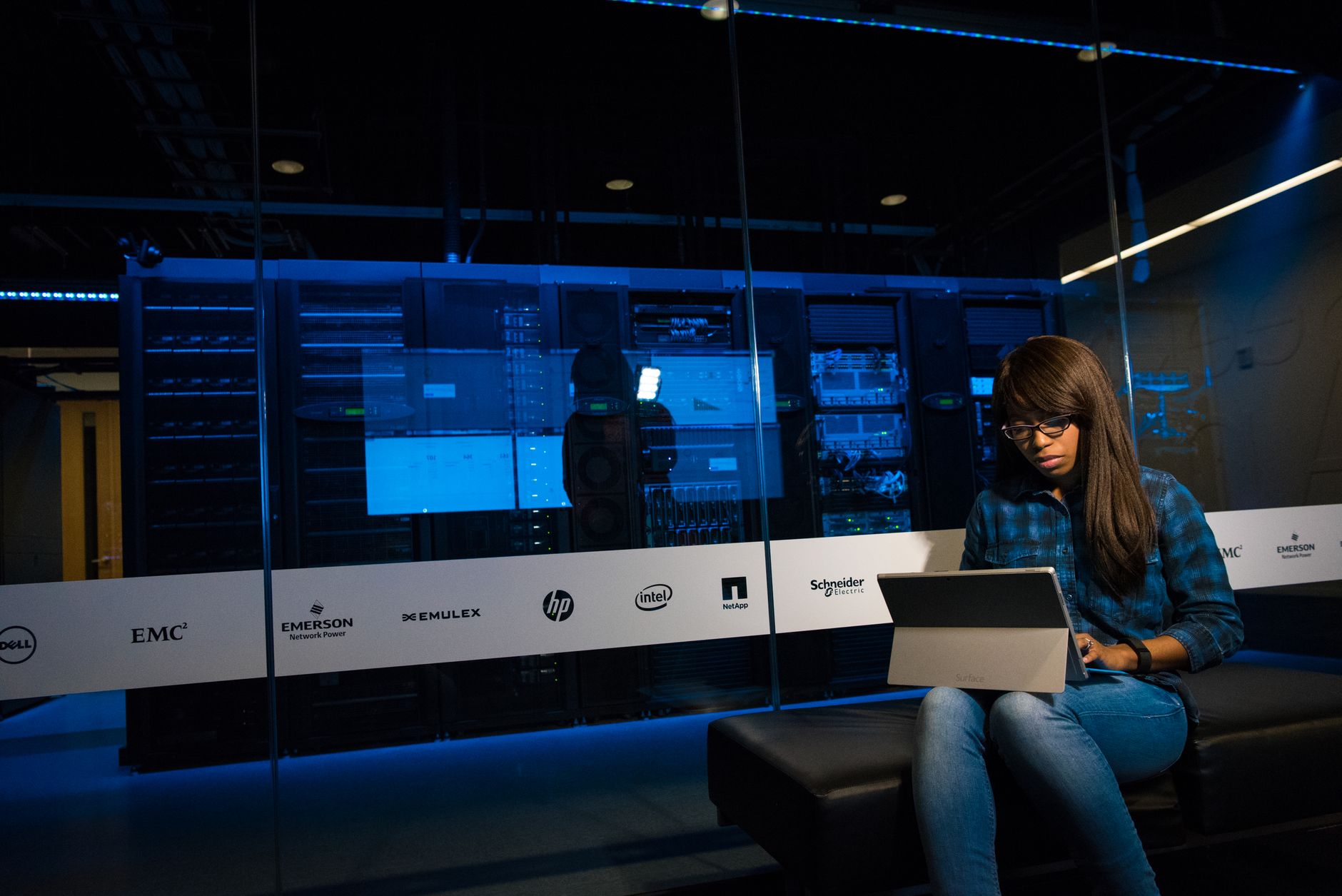
On the owned-server side, the informal calculation usually stops at the equipment's price tag. Left out: the power and cooling for the room it sits in, the software licenses running on it, hardware replacement every three to five years, whoever handles maintenance and backup day to day, and the physical space it occupies — which carries a cost too, even if the company already pays for that space some other way.
Neither incomplete account is a lie. They're just accounts cut in half — and a company that compares half an account to half an account always finds the result obvious, because it compared little to little.
What has to be in place
A well-made decision between buying a server and renting capacity rests on a few concrete assessments, not on preference or trend.
Measure the real usage pattern. A steady load that runs year-round without big spikes tends to favor owned equipment — it's running anyway. A load with seasonal or occasional spikes tends to favor rented capacity, which scales to the moment without leaving equipment idle the rest of the year.
The server's cost beyond the purchase. Power, cooling, licensing, replacement within five years, physical space, and who will operate the equipment day to day — all of that adds to the price on the invoice.
The cloud's cost beyond the monthly fee. The dollar's swing on the bill, charges for data leaving the provider, and consumption that grows on its own when nobody's watching the dashboard.
An estimate before the decision, not after. A compared budget for both options, built with this company's own usage numbers — not with the average from a generic article online.
An exit plan. If the decision needs to switch sides two or three years from now, how much work and time that takes — pulling data back in-house, or taking a system off a physical server to rebuild it in the cloud, is not a weekend job.
This is how Skills IT works: staying agnostic about vendors, it operates with both owned servers and rented cloud capacity, and builds the compared estimate before any purchase or contract — without pushing whichever model pays a bigger commission.
The payoff of deciding by the full math

The payoff of doing this full math doesn't show up on decision day — it shows up in the following months, when there's no surprise. A predictable budget, because currency swings and consumption growth were already built into the estimate. No capital spending at the wrong moment, because the equipment — if that's the option chosen — already had a planned replacement cycle instead of an emergency swap.
There's a less visible payoff too: the IT team stops spending energy defending the choice and starts spending it operating it. A decision made with numbers in hand is easier to revisit later, because the figures behind it are written down — not stuck in the head of whoever decided that day.
And for the owner or director, the biggest payoff is being able to approve a technology budget with the same clarity used to approve any other investment: knowing what goes into the bill, for how long, and what happens if usage changes.
A roadmap for the decision
Before signing a cloud contract or closing a server purchase, it's worth running through this roadmap:
-
Pull the usage pattern from the last 12 months. If the system runs steady all year, owned equipment has a better chance of paying off. If it spikes, rented capacity absorbs that without leftover capacity.
-
Add up the server's cost over five years, not the purchase price. Power, cooling, licensing, maintenance and end-of-cycle replacement all go into the account, not just the equipment's invoice.
-
Add up the cloud's cost by the highest-usage month, not the average. The real bill shows up at the peak — and at that month's exchange rate.
-
Ask who will operate each option day to day. An owned server with nobody looking after it is a risk; cloud with nobody watching consumption is a bill that grows on its own.
-
Write the decision down, with a review date set. Usage changes; a decision that made sense two years ago may not make sense today, and a scheduled review keeps that from going unnoticed too long.